
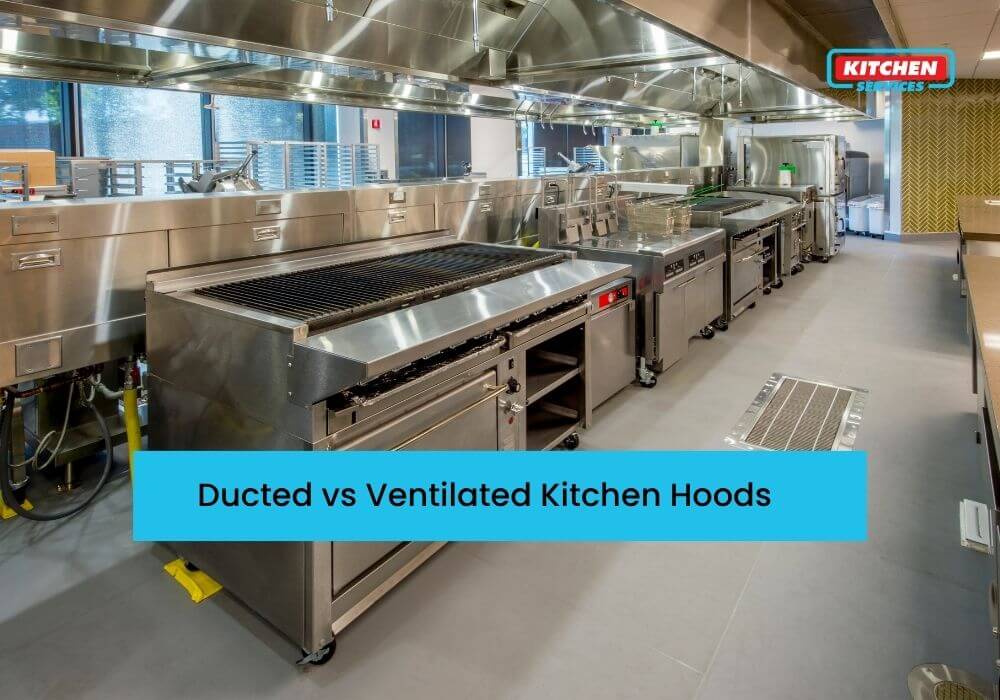
When it comes to maintaining a clean, safe, and efficient commercial kitchen, a properly installed kitchen hood is essential. Kitchen hoods, also known as range hoods, play a critical role in removing smoke, grease, odors, and airborne contaminants from the cooking environment. This guide will help restaurant owners, chefs, and facility managers understand the differences between ducted vs ventilated kitchen hoods, and which type is best suited for commercial kitchens.
What is a Kitchen Hood?
A kitchen hood is a ventilation system designed to capture and remove smoke, heat, odors, and airborne particles generated during cooking. Commercial kitchens often produce high levels of grease, heat, and steam, which can damage equipment, walls, and ceilings if not properly ventilated.
Benefits of a kitchen hood in commercial kitchens:
- Improved air quality: Removes smoke, grease, and odors to create a safe and pleasant cooking environment.
- Fire safety: Reduces the risk of fire by removing excess heat and grease-laden vapors.
- Cleanliness: Protects walls, ceilings, and countertops from sticky grease residue.
- Compliance: Helps restaurants meet health and safety regulations.
Professional commercial kitchen hood installation ensures optimal performance, reduces maintenance issues, and extends the lifespan of kitchen equipment.
Commercial hood installation is one of the most essential tasks in ventilation systems in restaurant kitchens. A high-quality exhaust hood installation will ensure fresh, cleaner air inside your restaurant. Furthermore, preventive maintenance will keep your hood in a good condition. And its always a good idea to hire a local commercial hood contractor for regular maintenance.
Types of Kitchen Hoods
1. Ducted (Ventilated) Kitchen Hoods
Ducted hoods are connected to an external vent, removing smoke, heat, and odors completely from the kitchen. They are ideal for high-use commercial kitchens and cooking operations that produce significant smoke or grease.
Advantages:
- High efficiency in smoke, odor, and grease removal.
- Reduces heat and humidity in the kitchen.
- Lower noise levels compared to ductless units.
Disadvantages:
- Requires ductwork to the outside, which may limit placement.
- Higher installation cost.
2. Ductless (Recirculating) Kitchen Hoods
Ductless hoods filter the air through carbon or charcoal filters and recirculate it back into the kitchen. They are commonly used in spaces where external ventilation is not possible.
Advantages:
- Flexible installation and portable.
- Lower upfront cost.
- No external ducting required.
Disadvantages:
- Slightly higher noise levels due to stronger fans.
- Less effective at removing heat, smoke, and humidity.
- Requires frequent filter replacement (2–3 times per year in commercial kitchens).
3. Convertible Kitchen Hoods
Convertible hoods offer the flexibility to be installed as either ducted or ductless. They are perfect for commercial kitchens that may need future ventilation adjustments.
Ducted vs Ventilated Kitchen Hoods: Key Differences
| Feature | Ducted Hood | Ductless Hood |
|---|---|---|
| Air Removal | Fully vents outside | Recirculates filtered air |
| Smoke & Odor Removal | High efficiency | Moderate efficiency |
| Heat & Humidity | Removes effectively | Limited removal |
| Noise Level | Generally quieter | Slightly higher |
| Installation | Requires ductwork | Flexible, no ducts needed |
| Maintenance | Filter cleaning | Filter replacement |
| Cost | Higher upfront cost | Lower upfront cost |
Tip for Commercial Kitchens: Ducted hoods are strongly recommended for high-volume cooking to maintain air quality, reduce fire risk, and comply with health regulations.
If you are setting up a new restaurant, make sure to check Commercial kitchen HVAC design guidelines.
Kitchen hoods should be in 2-7 sones
Choosing the Right Kitchen Hood for Commercial Kitchens
When selecting a commercial kitchen hood, consider the following: Consider professional installation for proper ducting and fire suppression integration.
Effective Coverage Area:
The hood should be at least as wide as the cooking surface. For example, a 36-inch stove requires a 36-inch or larger hood to ensure all smoke and grease are captured.
CFM (Cubic Feet per Minute):
Higher CFM ratings indicate stronger suction. Commercial kitchens typically require 800–1200 CFM depending on cooking intensity.
Filters:
- Ducted: Use metal baffle or mesh filters for grease trapping.
- Ductless: Use carbon/charcoal filters to neutralize odors. Replace regularly.
Noise Levels (Sones):
For commercial kitchens, a hood between 2–7 sones is ideal. Larger hoods tend to operate quieter at the same CFM due to less air friction.
Installation Location:
- Wall-mounted, island, under-cabinet, or insert types.
- Ensure ducted hoods have straight and short ducts to the outside for optimal performance.
Compliance & Safety:
Ensure the hood meets NFPA 96 standards for commercial kitchen ventilation.
Common Ductless Range Hood Options for Commercial Kitchens
While ducted hoods are preferred, ductless hoods may be suitable for limited spaces. Some top-rated ductless options include:
KOBE CHX3836SQBD-3 Brillia Ductless Range Hood – Heavy-duty 400 CFM with quiet mode and stainless-steel finish.
Broan-NuTone 413004 Non-Ducted Ductless Range Hood – Compact, stainless steel design with effective smoke and odor filtration.
IKTCH 30 inch Built-in Ductless Range Hood – High 900 CFM airflow with adjustable fan speeds and LED lighting.
CIARRA CAS75918B Ultra Slim Ductless Range Hood – Space-saving design with multiple aluminum mesh filters.
Cosmo COS-QB48 Ductless Range Hood – Powerful 500 CFM motor with LED lighting, energy-efficient and quiet operation.
Conclusion
For commercial kitchens, ducted kitchen hoods are the most effective solution for maintaining clean air, fire safety, and regulatory compliance. Ductless hoods offer flexibility and easier installation but are generally less effective for high-volume cooking.
Investing in a professional commercial kitchen hood installation ensures maximum efficiency, safety, and longevity of your kitchen equipment. When choosing a hood, consider airflow (CFM), coverage area, noise levels, filters, and compliance standards to make the best decision for your restaurant or catering facility.
FAQs
What is the most important feature for a ventilation hood system?
The most important feature of a ventilation hood system is its ability to effectively remove smoke, odors, grease, and airborne contaminants from your kitchen. This depends on the system’s airflow capacity (measured in CFM), proper ventilation (ducted or ductless), and noise levels. Additionally, features like filters, ease of maintenance, and lighting can enhance its functionality.
How to tell if your range hood is ducted or ductless?
To determine if your range hood is ducted or ductless:
- Ducted Hood: If the hood has a vent or pipe that leads outside, it’s ducted. You may notice an external exhaust outlet on your wall or roof.
- Ductless Hood: If there’s no external vent, the hood likely has charcoal filters for recirculating air back into the kitchen, making it ductless.
What is the difference between ducted and ductless range hood?
Ducted Range Hood: Ventilates air outdoors through ductwork. It’s highly efficient in removing smoke, heat, and cooking odors from the kitchen.
Ductless Range Hood: Uses charcoal or carbon filters to purify the air and then recirculates it back into the room. It doesn’t require external ductwork but is generally less effective than ducted hoods.
Which is better ducted or ductless range hood?
- Ducted Hoods are better for efficiency, especially in high-use kitchens, as they completely remove contaminants from the air.
- Ductless Hoods are more flexible in terms of installation but less effective in removing smoke and odors. They are ideal for spaces where ductwork isn’t feasible.
The choice depends on your kitchen setup, ventilation needs, and installation constraints.
What is the difference between a ducted and convertible range hood?
A ducted range hood vents air outside your home through ducts. It removes smoke, grease, odors, and heat efficiently by expelling them outdoors. This makes it ideal for high-heat or heavy-cooking kitchens.
A convertible range hood, on the other hand, offers more flexibility. It can be installed as either ducted or ductless. When used as ductless, it uses charcoal filters to clean the air before recirculating it back into the kitchen. Convertible models are perfect if exterior venting is not possible.
How to choose a range hood?
To choose the right range hood, consider the following:
- Ventilation Type: Ducted (better for performance) vs Ductless (easier installation).
- Mounting Style: Wall-mounted, under-cabinet, island, or insert.
- Size: Match the width of your cooking surface (usually 30″ or 36″).
- CFM Rating: Higher CFM (Cubic Feet per Minute) means stronger suction—recommended 300+ CFM for heavy cooking.
- Noise Level: Check sone ratings; lower numbers mean quieter operation.
- Filters: Metal baffle filters for ducted; charcoal filters for ductless.
- Features: Look for lighting, variable fan speeds, auto shut-off, etc.
Is a ductless range hood effective?
Ductless range hoods can be effective for light to moderate cooking. They use charcoal filters to trap grease and neutralize odors, then recirculate clean air back into the kitchen. However, they don’t remove heat or humidity like ducted hoods do.
Best for: Apartments, condos, or homes without exterior venting options.
Not ideal for: Heavy frying, grilling, or high-smoke cooking.
Do ductless range hoods remove smoke?
Ductless range hoods can help reduce light smoke, but they do not fully remove smoke the way ducted hoods do. The charcoal filters absorb some smoke particles, but since the air isn’t vented outside, not all smoke or fumes are eliminated. If smoke removal is a top priority, a ducted range hood is a better choice.
