
Maintaining a clean commercial kitchen is essential for food safety, fire prevention, legal compliance, and smooth day-to-day operations. Whether you run a restaurant, hotel, café, catering facility, or industrial kitchen, cleanliness is required under FDA Food Code, OSHA sanitation standards, and NFPA 96 commercial hood cleaning guidelines.
This comprehensive guide breaks down daily, weekly, monthly, and annual cleaning tasks, plus step-by-step procedures and expert recommendations to keep your commercial kitchen clean, compliant, and ready for any health inspection.
Why Keeping Your Commercial Kitchen Clean Matters
A clean commercial kitchen is not just an operational preference — it is a legal and safety requirement. Proper cleaning prevents:
✔ Foodborne illnesses
Dirty surfaces spread bacteria like Salmonella, E. coli, and Listeria.
✔ Cross-contamination
Improper sanitation allows raw food bacteria to spread to ready-to-eat areas.
✔ Health code violations
Unsanitary kitchens receive lower health scores and risk closure.
✔ Fire hazards due to grease buildup
Grease inside hoods, ducts, and vents is the #1 cause of restaurant fires.
✔ Equipment breakdown & higher energy bills
Dirty appliances run hotter, slower, and cost more to operate.
✔ Poor customer experience
Clean kitchens directly impact food quality, safety, and brand reputation.
Regulatory Standards You Must Follow
Commercial kitchens are legally required to meet specific cleaning and sanitation standards:
NFPA 96 – Fire Code for Commercial Kitchen Exhaust Systems
Requires:
- Hood cleaning every 30, 60, or 90 days depending on cooking volume
- Complete exhaust system degreasing from hood to duct to fan
- Professional servicing by certified hood cleaners
FDA Food Code
Requires:
- Sanitizing food-contact surfaces
- Preventing cross-contamination
- Proper refrigeration cleaning
- Correct storage conditions
OSHA Sanitation Standards
Requires:
- Worker safety
- Clean, hazard-free work environment
- Proper chemical handling & labeling
Daily Commercial Kitchen Cleaning Checklist
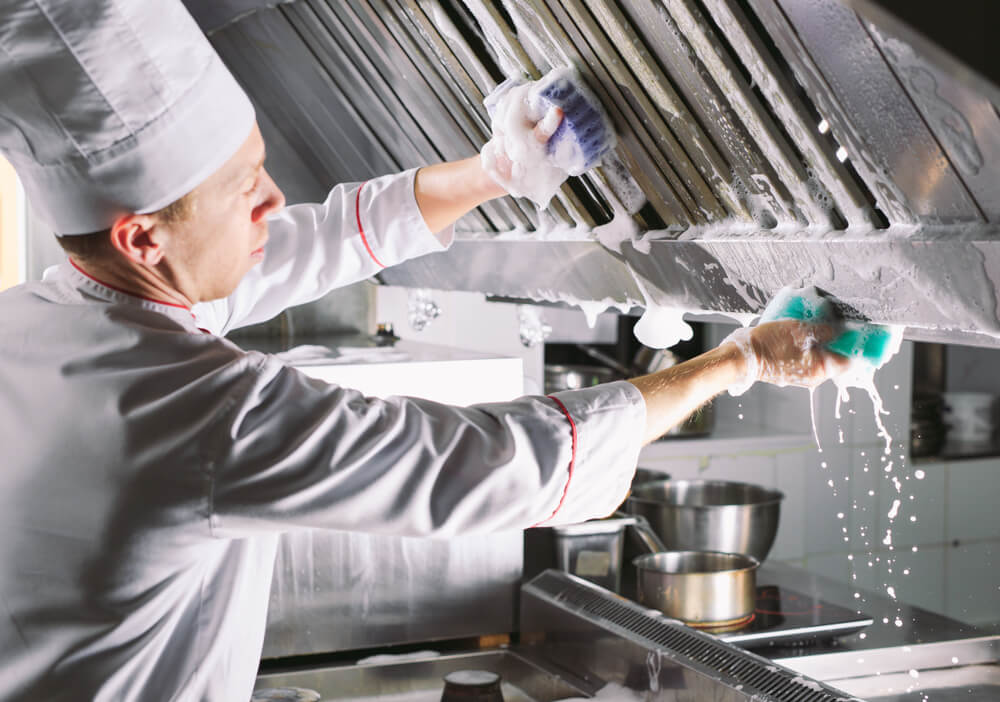
These tasks must be performed between shifts and at the end of each day to maintain hygiene and prevent contamination.
After Each Cooking Shift
- Scrub grills after cooking meat, poultry, or fish
- Wipe prep tables and shelves
- Switch cutting boards
- Change sanitizing water
- Replace cleaning rags
- Empty trash bins
- Sweep walk-in refrigerators
End-of-Day Cleaning Tasks
- Clean fryers
- Brush and wipe down grills
- Empty sanitizing buckets
- Send cleaning rags, aprons, and chef coats to laundry (separately)
- Wash and sanitize all food-contact surfaces
- Empty and clean steam table
- Wash meat and cheese slicers
- Cover food bins
- Wash floor mats
- Sweep, mop, and disinfect kitchen floors
Daily Appliance Cleaning
- Clean grease traps
- Replace foil linings in grills and flattops
- Wash can openers
- Run hood filters through dishwasher
- Clean coffee machines
- Wipe microwave inside & outside
- Clean refrigerator and freezer shelves
Weekly Commercial Kitchen Cleaning Checklist
Rotate these tasks among staff to ensure fair workload:
- Deep-clean coffee machines
- Sanitize coolers and cold storage
- Drain and clean sinks
- Descale faucets
- Wipe and degrease ovens (following manufacturer instructions)
- Oil cast-iron cookware
- Use drain cleaners on floor drains
Monthly Commercial Kitchen Deep Cleaning Checklist
These tasks reduce fire hazards, prevent breakdowns, and maintain compliance:
- Pull out ovens, stoves, and fryers to clean behind them
- Deep-clean all freezers
- Empty and sanitize ice machines
- Calibrate thermometers
- Clean ceilings and walls
- Clean dry storage area
- Replace pest control traps
- Restock first-aid kits
- Update Material Safety Data Sheets (MSDS)
6. Annual Cleaning & Compliance Tasks
Many of these require a professional commercial kitchen cleaning company:
- Inspect fire suppression system
- Service fire extinguishers (semi-annual recommended)
- Professional hood and exhaust cleaning (minimum twice a year, NFPA 96 standard)
- Clean pilot lights on gas equipment
- Comprehensive appliance deep cleaning
Step-By-Step Commercial Kitchen Cleaning Procedure
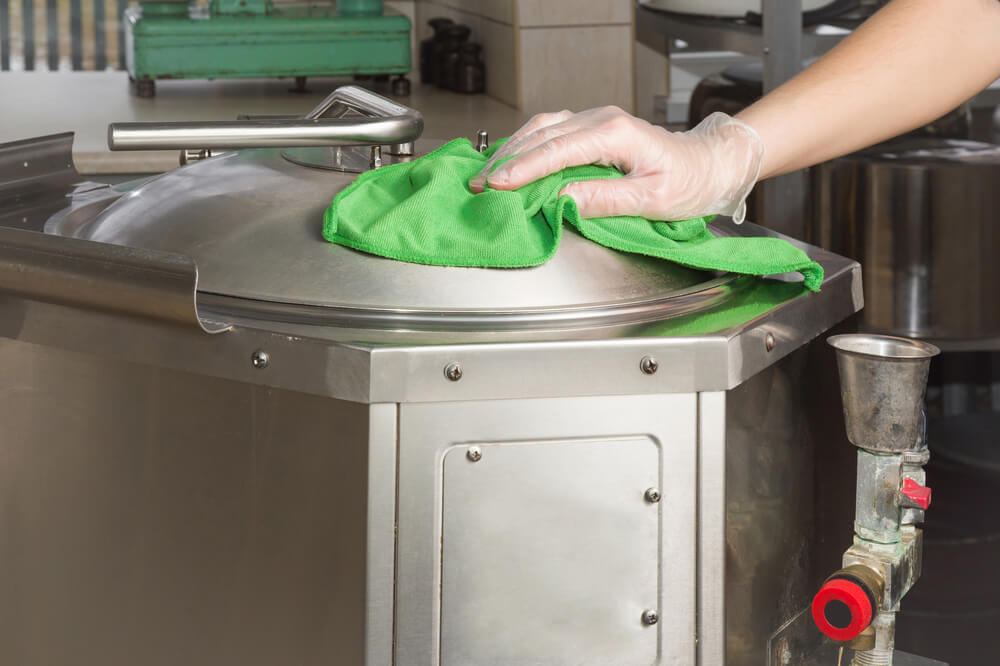
Step 1: Preparation
Gather all supplies:
- Food-safe cleaners
- Degreasers
- Disinfectants
- Sanitizers
- Scrubbers, brushes, sponges
- Mops and buckets
- Trash bags
- Protective gloves, aprons, PPE
Shut off electrical equipment and remove all food from prep areas.
Step 2: Initial Cleaning
- Remove clutter from countertops
- Discard expired or spoiled ingredients
- Wash and sanitize dishes and utensils
- Empty trash and clean containers
Step 3: Surface Cleaning
- Clean and sanitize all prep surfaces
- Degrease equipment surfaces
- Clean appliances externally
- Sweep and mop floors with antibacterial cleaner
Step 4: Deep Cleaning
- Clean refrigerator & freezer interiors
- Wipe door seals
- Disassemble and clean fryers, grills, ovens
- Clean exhaust hood filters
- Remove grease buildup from walls & ceilings
- Sanitize floor drains
Hood, Exhaust & Air Quality Cleaning
One of the most important yet overlooked areas.
Why It Matters
- Grease buildup inside hoods is the #1 cause of restaurant fires
- Poor ventilation reduces air quality and causes odors
- A dirty hood fails health inspections
Cleaning Frequency (NFPA 96 Guidelines)
- Every 30 days: Heavy grease kitchens (fried chicken, BBQ, fast food)
- Every 90 days: Medium-volume restaurants
- Every 180 days: Low-volume kitchens
What Must Be Cleaned
- Hood canopy
- Baffle filters
- Exhaust duct
- Exhaust fan
- Horizontal and vertical ductwork
Recommendation: Always hire certified hood cleaning professionals.
Cleaning Tips to Prevent Fire Hazards
- Train staff in emergency response
- Remove grease from cooking surfaces daily
- Clean hood filters weekly
- Professionally clean hoods every 90 days
- Never let oil spill beneath fryers
- Keep fire suppression systems maintained
Conclusion
No doubt that you can clean your entire commercial kitchen by yourself, but it would always be the best option to hire commercial kitchen hood cleaners and experts to avoid any kind of fire hazards, etc. When we talk about the safety of your eating business, you should always hire the most reliable kitchen hood cleaning company as it makes a considerable difference. Even it is stated in the instructions by NFPA 96 that the whole exhaust system needs to be meticulously cleaned by a certified, trained, and qualified team of professionals in order to meet industry standards. Cleaning companies that lack the expertise, specialized tools, and adequate experience can do more harm than good. So, the best practice would be to achieve the bottom line of making sure to clean and safe kitchen exhaust systems, it is a must to hire an experienced contractor who can also ensure complete documentation.
Commercial Kitchen Cleaning FAQs
How to deep clean a restaurant kitchen?
To deep clean a restaurant kitchen, start by removing all items from surfaces and appliances. Wash and sanitize countertops, cutting boards, and equipment with hot, soapy water, followed by a disinfectant. Clean ovens, grills, and fryers with specialized cleaners. Scrub floors and walls, paying extra attention to grease buildup. Finally, empty trash bins and clean vents and exhaust systems to ensure proper ventilation and prevent fire hazards.
What are restaurant kitchen cleaning rules?
Restaurant kitchen cleaning rules include maintaining a clean and sanitary environment to prevent foodborne illnesses and ensure safety. Regularly wash and sanitize all surfaces, including countertops and cutting boards, and clean equipment after each use. Floors should be swept and mopped daily, with thorough deep cleaning of grease and spills. Trash bins must be emptied frequently, and vents and exhaust systems should be inspected and cleaned regularly. Adhere to a schedule for routine cleaning tasks and ensure all staff are trained in proper hygiene practices.
What are commercial kitchen sanitation guidelines?
Hand Hygiene:
- Wash hands thoroughly and frequently with soap and water.
- Use hand sanitizers as needed.
Food Safety:
- Maintain proper food temperatures (hot foods hot, cold foods cold).
- Store food correctly to avoid cross-contamination.
Surface Cleaning:
- Use food-safe cleaners and sanitizers on all food contact surfaces.
- Clean spills immediately.
Pest Control:
- Implement a pest control plan and maintain cleanliness to avoid attracting pests.
Waste Management:
- Dispose of waste properly and frequently.
- Clean and sanitize waste bins regularly.
How to clean a commercial kitchen floor?
Sweep or Vacuum:
- Remove loose debris and food particles.
Scrub:
- Use a floor scrubber or mop with a degreasing cleaner. Scrub the floor, focusing on areas with built-up grease.
Rinse:
- Rinse the floor with clean water to remove any detergent residues.
Dry:
- Allow the floor to air dry or use a dry mop to speed up the process.
Inspect:
- Check for any missed spots and clean them if necessary.
How often must a meat slicer be cleaned and sanitized?
After Each Use: Clean and sanitize the meat slicer after every use to prevent cross-contamination and bacterial growth.
Daily: Ensure it undergoes a thorough cleaning and sanitizing process at the end of each day if used frequently.
